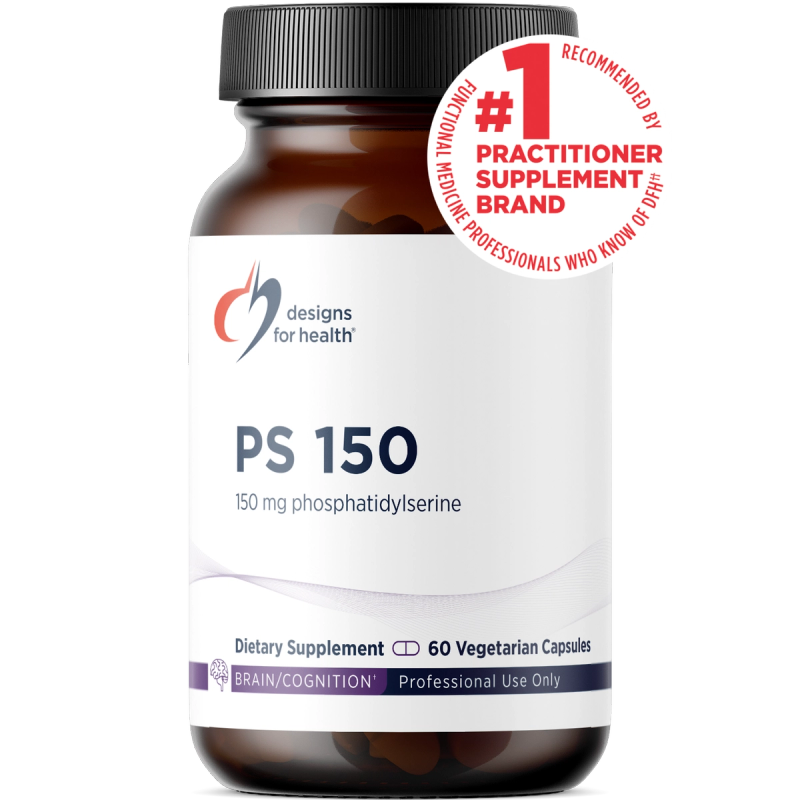
SKU: PHSCP

PS 150

Brain Health*

Delivers relevant amounts of non-soy, sunflower-sourced phosphatidylserine (PS) to support healthy cognitive function and hormone balance.*

Provides 150 mg of phosphatidylserine (PS) per serving from sunflower lecithin.


• May help support mental focus, healthy brain function, and memory*
• Helps support a healthy stress response*

Recommended Use: Take 1 capsule per day or as directed by your health-care practitioner.

What is phosphatidylserine?

Phosphatidylserine (PS) is an important compound for supporting optimal brain function, memory, and mental focus.* The body's natural production of PS declines with age, and there are no foods rich in PS. Thus, supplementation can be helpful to maintain optimal status.*

Designs for Health

Terms & Conditions

For media/press inquiries, please contact press@designsforhealth.com.

* These statements have not been evaluated by the Food and Drug Administration. This product is not intended to diagnose, treat, cure or prevent any disease.

©2019-2026 Designs for Health, Inc. All rights reserved.

The Designs for Health Spotlight™ functional wellness tests are not diagnostic and are not eligible for coverage under Medicare, Medicaid, or medical insurance. DFH Spotlight testing must be ordered or authorized by a qualified health-care provider registered with DFH. Please reach out directly to your practitioner to express your interest in any of the Spotlight tests. Spotlight test kits are not available for purchase or shipping in New York or the U.S. territories.

††U.S.A. Functional Medicine MDs, DOs, NDs, DCs, and Nutrition Professionals surveyed in 2025 for Designs for Health.

¹Sawada D, Kawai T, Nishida K, Kuwano Y, Fujiwara S, Rokutan K. Daily intake of Lactobacillus gasseri CP2305 improves mental, physical, and sleep quality among Japanese medical students enrolled in a cadaver dissection course. J Funct Foods. 2017;31:188-197. doi:10.1016/j.jff.2017.01.042.

²Keystone commensal strains based on the HACK index. 8x comparison based on five keystone strains (up to 24% combined abundance) vs. single-strain Akkermansia  products (~3%). Percentages reflect typical abundance in healthy adult microbiomes per published research. Individual colonization varies.